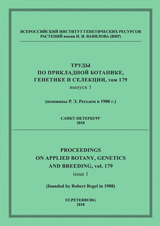
The journal Proceedings on Applied Botany, Genetics and Breeding was founded in 1908. Proceedings on Applied Botany, Genetics and Breeding publishes in the Russian and English languages: reviews, original experimental research results, research protocols and methods in the fields of botany, evolution, taxonomy, agrobiology, genetics, physiology, biochemistry, immunology, molecular biology, and biotechnology. Individual issues of Proceedings on Applied Botany, Genetics and Breeding may have a definite thematic orientation. The journal is intended for experts conducting research in the sphere of collecting, conservation, comprehensive studying, and utilization of plant resources.
Current issue
MOBILIZATION AND CONSERVATION OF THE GENETIC DIVERSITY OF CULTIVATED PLANTS AND THEIR WILD RELATIVES
The largest collection of sunflower genetic resources is held by the National Plant Germplasm System of the United States. However, since the American continent is the center of origin for annual and perennial wild Helianthus L. spp., two-thirds of the U.S. collection comprises wild accessions collected in North and Central Americas. The second-largest collection of cultivated sunflower belongs to the French genebank. The richest and truly unique collection in terms of genotype diversity is maintained at VIR, Russia. It harbors 2,306 accessions, which makes it third in the world. The first landraces and earliest cultivars developed at plant breeding institutions are concentrated here, since it was in Russia that sunflower crop cultivation was established. High-oleic cultivars, such as ‘Peredovik’, ‘Smena’, ‘Sputnik’, etc., served as initial sources for the first American lines for heterosis breeding. Domestic cultivars are resistant to broomrape, rust, downy mildew, and sunflower moth. The germplasm delivered by collecting missions from Moldova, Ukraine, Central Russia, and Primorsky Territory in the 1960–1980s is also valuable and unique. The collection has been studied by researchers in line with principal breeding trends. Long-term research activities have resulted in setting up trait-specific collections of high-oleic, high-protein, large-fruited, tall-growing, and pathogen-resistant accessions. Short-stemmed and CMS lines, as well as pollen fertility restorers, have been developed for sunflower heterosis breeding.
Background. The relevance of the study is in the need to improve methods of varietal identification and re-examination of duplicate accessions. It is especially important for large collections that include old breeding cultivars, because they often lack systemized information about their distinctive traits.
Materials and methods. The study covered 39 old potato cultivars preserved at the Polar Experiment Station of VIR, 29 of which were represented by 2–3 duplicate accessions. A search for published data and verification of cultivar-specific morphological traits were conducted, along with microsatellite genotyping and molecular screening using markers of genes controlling resistance to Globodera rostochiensis (Wollenweber) Behrens, Synchytrium endobioticum (Schilbersky) Percival, Phytophthora infestans (Montagne) de Bary, as well as widely used markers of plastid and mitochondrial DNA types.
Results. As a result, individual SSR profiles, information on organelle DNA types, and data about the presence/absence of markers associated with resistance genes for several pathogens and pests were obtained for 37 accessions of old potato cultivars. For 25 out of 29 cultivars that were represented by different numbers of duplicates, SSR profiles were identical for all such accessions, while four accessions manifested discrepancies when compared with their duplicates.
Conclusion. The results of SSR analysis for duplicate accessions confirmed the published data on the prospects of using microsatellite analysis to increase the efficiency of bioresource collection management, especially as far as old cultivars are concerned.
Background. By now, insufficient attention has been paid to natural forage land reclamation. This situation has led to the gradual conversion of hayfields into pastures and their subsequent degradation, accompanied by a decrease in the productivity of forage lands, a change in the species composition, etc. Many farms counterbalance feed shortages mostly with species-poor seeded hayfields and pastures, but these are unable to fully replace natural rangelands either in species richness and diversity or in the availability of bioactive compounds and feed productivity.
Materials and methods. Geobotanical studies were conducted in 2017–2023 over the territory of the Oyokskoe Educational, Research and Production Farm, affiliated to Irkutsk State Agrarian University. The forage lands were surveyed using the conventional guidelines for a geobotanical study of natural rangelands.
Results and conclusions. Two classes of meadow ecosystems were identified within the target area (lowland meadow microdepressions, and short-flooded meadows of the riverbed and central floodplain), as well as one class of marsh ecosystems. The area under meadow ecosystems is 4235.9 hectares (14.54% of the total target area), of which 14.2% is occupied by hayfields (602.1 ha), and 85.8% by pastures (3633.8 ha). The productivity of forage lands is 0.71–1.26 t/ha (0.58–1.00 t/ha consumable air-dry weight). Surface improvement is recommended for dry and short-flooded meadows. Densely shrub-encroached medium-flooded, lowland, and marshy meadows require fundamental improvement.
STUDYING AND UTILIZATION OF PLANT GENETIC RESOURCES
Background. In recent years, blackberry has become an increasingly popular small-fruit crop in Russia. However, its winter hardiness is relatively low, so expanding its cultivation to regions with cold winters requires winter sheltering or the development of more winter-hardy cultivars through selective breeding. The objective of this study was to justify the need to develop several models of blackberry cultivars for the central regions of Russia due to their different frost and winter hardiness and growth types.
Materials and methods. Thirty-nine accessions of different morphological types from the blackberry bioresource collection were analyzed for their frost resistance in Orel Province in 2022–2025 (with absolute minimums of ‒25°C, ‒29.5°C, and ‒19°C, respectively). Field tests were performed using the methodology conventional for Russia. Most of the cultivars were covered with agrofabric during the winters. Variance analysis was used for statistical data processing.
Results. Differences in frost resistance were found among four morphological types of cultivars and individual genotypes within the groups. Representatives of three groups ‒ upright summer, primocane-fruiting, and trailing summer cultivars ‒ were identified as promising for solving the problem of winter hardiness through selective breeding in this climate zone.
Conclusion. The analysis of the data obtained helped to choose three main models of blackberry cultivars as benchmarks for breeding targeted at increasing the crop’s winter hardiness under the conditions of central Russia. The first model incorporates cultivars with high winter hardiness and an erect, compact growth habit, intended for unprotected cultivation; the second model is represented by primocane-fruiting cultivars with early fall ripening of berries and frost-resistant underground parts for cultivation without winter sheltering; the third model contains early-ripening cultivars with trailing flexible shoots for covered cultivation.
Background. The use of betalains as natural food colorants faces difficulties related to the stability of their chemical structure during storage and, consequently, their coloring ability. The relevance of the study is due to insufficient knowledge of the patterns of changes in betalain concentration during long-term storage.
Materials and methods. The study analyzed 52 table beet accessions with intense red root color from the VIR collection. Quantitative measurement of betalains was carried out spectrophotometrically.
Results and conclusion. The content of these pigments in the studied accessions ranged from 130 to 1526 mg/100 g dry weight, specifically: betacyanins varied from 82 to 1271 mg/100 g, and betaxanthins from 23 to 494 mg/100 g. Using cluster analysis, all accessions were divided into 4 groups depending on the total betalain content. Data were obtained on the monthly dynamics of betalain content in table beet roots during long-term storage. In the first month after harvesting and placing the roots into storage, an increase in betalain content of approximately 40% was observed. On average, pigment degradation during long-term storage was 28%. The decrease in betalains occurred mainly due to a reduction in the amount of betacyanins. Among the studied accessions, cv. ‘Generalskaya’ (k-3894, Russia) is of greatest interest for obtaining the colorant immediately after harvesting and in the first month of storage. Cvs. ‘Kombat’ (k-4032, Russia) and ‘Marusya’ (k-3982, Russia) turned out to be the most stable sources of the pigment throughout the entire storage period.
Background. According to the 2023 report of the Observatory of Economic Complexity (OEC), the global maize flour market has been growing by 5.85% annually over the past five years. This positive trend is driven by the increased popularity of gluten-free products and innovative advances in maize cultivation and processing technologies.
Materials and methods. Ten accessions of six maize subspecies with diploid and tetraploid genomes from the VIR collection were analyzed. Bread wheat accessions with medium and poor flour quality were selected to assess the effect of the maize component on the technological properties of composite flour. Sedimentation analysis was used to evaluate technological properties of the grain protein complex in maize. The carbohydrate complex was determined by the falling number using a Brabender Micro Visco-Amylo-Graph. Biochemical composition of maize grain was quantified with a SupNIR-2750 analyzer (China). Statistical data processing was performed using Statistica 10.0 software from StatSoft Russia (2023).
Results. The studied maize subspecies manifested differences in particle size distribution, swelling potential of flour particles, starch thermodynamics, the degree and nature of the impact on the wheat component during combined processing at the level of the rheology of gluten, dough and paste, as well as bread baking. Strengthening of the protein complex and suppression of enzymatic processes were shown. Waxy maize was found to have an improving effect on the composite wheat-maize dough. Promising accessions were also identified for flour, cereal and feed uses. Sweet maize accessions were the most inert during combined processing with wheat grain.
Conclusion. The differences in technological properties, revealed among the tested accessions and within technological groups, make it possible to perform selection breeding for these properties.
Background. Under the conditions of climate aridization and increasing water deficit in Uzbekistan, sesame (Sesamum indicum L.) is considered a promising oilseed crop, capable of adapting to high temperatures and limited water availability. However, physiological and biochemical features of the photosynthetic apparatus in different sesame genotypes remain insufficiently studied, which limits targeted breeding of stress-tolerant forms.
Materials and methods. Twelve sesame collection genotypes of diverse ecogeographic origin, grown in Qibray District, Tashkent Region, in 2025, were studied. The content of chlorophyll a, chlorophyll b, their total, and carotenoids in leaves was measured spectrophotometrically after extraction with 96% ethanol at the stages of budding, flowering, and the onset of capsule formation, using Lichtenthaler’s formulas.
Results. The concentration of chlorophyll a (Chl a) was found to remain relatively stable during the generative period (1.06–1.18 mg/g), whereas the content of Chl b exhibited pronounced phase-dependent dynamics, decreasing toward flowering and increasing in the stage of capsule formation. The highest values of total chlorophyll (1.97 mg/g) were recorded in the late development stage. The Chl a/b ratio varied from 1.6 to 2.4, reaching its maximum during flowering, and minimum during fruit formation. The Car/Chl (a+b) index increased to 0.195 during flowering and declined to 0.108 at the onset of fruit development. Among the genotypes, K66, K161, and K1396 showed the highest levels of chlorophylls and carotenoids, which attest to their enhanced photoprotective capacity and potential stress tolerance.
Conclusion. The obtained data confirm pronounced phase-related and genotypic variability of the pigment system in sesame leaves. Genotypes K66, K161, and K1396 may be recommended as source material for breeding programs aimed at improving drought tolerance and productivity of the crop under arid conditions.
Background. The objective of our research was to obtain regenerated plants of vegetable pea through tissue culture by initiating organogenesis.
Materials and methods. Two vegetable pea cultivars served as the research material. Three sterilizing agents were evaluated when processing dry and swollen seeds. The explants were the apical bud, the next node without the leaf apparatus, and the cotyledon node. Four variants of callus induction media were studied, three variants for shoot formation, and two for rhizogenesis.
Results. Callus formation was recorded for all types of explants on all variants of media. The study of the effect of phytohormones on the shoot formation in callus aggregates showed that an increase in the concentration of cytokinin leads to an increase in the number of shoot-forming calli and the number of shoots.
Conclusions. Dry seeds should be used when cultivating pea plants with wrinkled seeds in vitro, with 1% NaOCl solution as a sterilizing agent. For callus tissue production, it is recommended to use the second (NAA, 5 mg/L) or third (IBK, 6 mg/L, and 6-BAP, 1 mg/L) variants of MSC. MSS2 (6-BAP, 2.5 mg/L, and IBC, 0.5 mg/L) proved to be the optimal shoot induction environment. The media variants for rhizogenesis induction had similar effectiveness.
Background. Species of the genus Iris L. attract the attention of researchers as a source of bioactive compounds promising for the development of medicinal drugs. There are no data on the characteristics of the latent period for Iris pallasii Fisch. ex Trevir. in the flora of Kazakhstan.
Materials and methods. Seeds were collected from 2015 through 2022 in Almaty Region and from plants grown in the medicinal plant collection plot of the Botanical Garden of the Institute of Botany and Phytointroduction. A soft-beam mobile X-ray diagnostic unit was used to assess the quality of I. pallasii seeds. A 0.3% hydrogen peroxide solution, a 0.05% epibrassinolide solution, and Biostim were applied as standard growth stimulants. Control plants were germinated in water only.
Results and discussion. The 1000-seed weight varied slightly within the species, regardless of the origin of seeds: natural I. pallasii seeds weighed from 17.2 to 19.1 g, while introduced plants of this species produced slightly larger seeds, weighing from 18.1 to 19.7 g. Laboratory evaluation of I. pallasii seed germination showed that the use of various growth stimulants contributed to increased germination, which was evident during prolonged seed germination (up to 110 days). The maximum number of germinating seeds was recorded during the 30–40 (up to 80) days of the experiment. However, some seeds (in both the control and experimental plants) germinated only on days 100–110 of the experiment.
Conclusion. I. pallasii produced seeds of varying quality in different years. Under cultivation conditions at the Botanical Garden, they typically produced a higher percentage of mature, viable seeds with high, long-lasting germination. Growth stimulants increased laboratory seed germination by 10–20%. The maximum number of germinating I. pallasii seeds under all experimental conditions, regardless of growing location, was observed between days 40 and 80.
GENETICS OF CULTIVATED PLANTS AND THEIR WILD RELATIVES
Background. Soybean (Glycine L.) Merr.) is one of the most important crops worldwide. Optimizing the growing season is a key focus in soybean breeding. Modern methods, including the use of DNA markers, make it possible to accelerate selection of desired genotypes. One of the marker identification tools is a genome-wide association study (GWAS). The research objective was to pinpoint the loci associated with the duration of the germination-to-flowering period.
Materials and methods. The GWAS utilized the data from a three-year field study (2023–2025) conducted at Adler Experiment Station of VIR (43.450° N, 39.933° E), and the GBS data for a set of 169 soybean accessions from the VIR collection (origin: China, Russia, USA, Moldova, Canada, etc.). The Tassel 5.0 software was employed, implementing a mixed linear model (MLM).
Results. Forty-eight significant SNPs distributed across 14 chromosomes were identified. These included the known QTLs involved in flowering regulation and the potentially novel chromosome loci Gm1 (115 cM), Gm6 (117 cM), Gm7 (34-36 cM), and Gm8 (116 cM), previously undescribed in the literature.
Conclusion. The study of soybean cultivars of various geographic origin in the coastal zone of the Black Sea resulted in identifying new markers associated with flowering schedules.
Background. Growing genetically protected barley cultivars is considered the most cost-efficient method to control the greenbug, Schizaphis graminum Rondani. Unfortunately, this dangerous phytophage is capable of rapidly overcoming plant resistance. Accessions of local barleys from Asian countries that entered the collection of the N.I. Vavilov All-Russian Institute of Plant Genetic Resources could serve as a rich source of new effective resistance genes.
Materials and methods. Laboratory experiments were conducted to assess the resistance of 65 barley accessions from Afghanistan and 7 pure lines, isolated from heterogeneous accessions in previous studies, to the Krasnodar greenbug population using a scoring scale. The study also included cv. ‘Post’ (k-31204, USA, carrier of the Rsg1 resistance gene), and lines isolated from barley landrace accessions k-15903, k-15600, k-16190 (China), k-4080, k-3885, k-3904 (Mongolia) and cv. ‘Onokhoisky’ (k-16626, Buryatia, Russia), each containing one gene controlling low plant damage, as well as a line isolated from cv. ‘Namji Milyang Native K647 1007’ (k-28129, North Korea), protected by dominant and recessive genes. Genetic control of greenbug resistance in the lines from Afghanistan was studied using aphid test clones and hybridological analysis.
Results and conclusions. Eight heterogeneous accessions from Afghanistan had plants displaying a high level of resistance to S. graminum. Assessing cv. ‘Post’ and seven lines isolated from Afghan accessions for their response to 93 aphid clones made it possible to identify 29 virulence phenotypes. All seven lines contained resistance alleles that differed from one another and from those that we had previously identified. In most cases, the efficacy of the genes protecting the lines isolated from Afghan accessions was low. Two lines, 20209 and 22421, were resistant to aphid populations. Line 22421 exhibited monogenic dominant control of the trait.
Background. Development of adaptable high-yielding cultivars of common oat (Avena sativa L.) for the unstable climate of the Northern Trans-Urals requires the involvement of new donors of valuable genes in breeding practice and an in-depth study into the inheritance patterns of useful agronomic traits. The objective was to determine the effect of heterosis and the type of phenotypic dominance for the main quantitative characters in first-generation (F1) hybrids of common oat under the soil and climate conditions of the Northern Trans-Urals.
Materials and methods. In 2023–2024, fourteen hybrid combinations (F1) from crosses between local cultivars (‘Tobolyak’, ‘Otrada’, and ‘Foma’) and donors of crown rust resistance genes (Pc) were studied in the forest-steppe zone of Tyumen Province. The tests were carried out in the experimental field of the Research Institute of Agriculture for the Northern Trans-Ural Region and the laboratory of genomics research in crop production using VIR’s guidelines. Phenotypic dominance coefficients (Hp) and true heterosis values were calculated.
Results. It was found that extreme temperatures up to +36°C during the hybridization period (2023) limited grain setting. In 2024, all the studied hybrids manifested the effect of heterosis simultaneously in four plant characters: plant height, panicle length, grain number per plant, and grain weight per plant. Positive overdominance for all useful agronomic traits was observed in the combinations ‘Tobolyak’ × ‘AC Francis’, ‘AC Francis’ × ‘Foma’, and Narps × ‘Otrada’; negative overdominance was shown by k-15021 × ‘Tobolyak’, and ‘Otrada’ × k-15021.
Conclusions. Promising combinations were identified for a set of traits and the highest hybrid vigor: ‘Tobolyak’ × ‘AC Francis’, ‘AC Francis’ × ‘Foma’, ‘Foma’ × k-15021, and Narps × ‘Otrada’. These genotypes are recommended for further breeding work as sources of high productivity and adaptability.
Background. High-stearic sunflower is seen as an alternative to imported palm oil in the industrial production of solid vegetable fats. Wide phenotypic variability of fatty acid content in sunflower seeds under the influence of various growing conditions was described. In mutant high-stearic lines CAS-4 and CAS-8, a negative relationship between temperature and stearic acid content was observed. The objective was to study the phenotypic variability of essential fatty acid composition in the seeds of lines LG34, LG36 and LG37 with high content of stearic and oleic fatty acids under various environmental conditions and a hydroponic system.
Materials and methods. The study employed high-stearic and high-oleic lines LG34, LG36 and LG37 from the sunflower genetic collection of the Pustovoit Institute. They were grown in the field in 2023 and 2024, as well as in a hydroponic growth chamber for two seasons (2024 and 2025). Gas–liquid chromatography was used to analyze the composition of essential fatty acids in the oil of 10 individual achenes of the studied samples.
Results. Stearic acid content in the studied lines increased by 10.2–12.1%, and oleic acid content decreased by 16.6–16.8% in the hydroponic system, when compared to the field conditions. The level of palmitic acid was more stable, and its variability did not show such a pattern. ANOVA helped to reveal a significant effect of the year’s conditions on the level of all essential fatty acids. The highest share of the environmental effect was recorded for stearic and oleic acids: 85% and 67%, respectively. For stearic acid content, a strong negative correlation was found with the maximum and mean daily air temperatures (r = –0.94 and r = –0.85), and a strong positive one with the minimum temperature (r = 0.86).
Conclusion. An increase in stearic acid content and a decrease in oleic acid content in the oil of the seeds of high-stearic sunflower lines LG34, LG36, and LG37 was established for the hydroponic conditions.
DOMESTIC PLANT BREEDING AT THE PRESENT STAGE
Background. Durum wheat breeding for higher carotenoid content in grain and end products (pasta or groats) is a critical area of focus. Grain carotenoids provide a beneficial effect on human health. This study examines the use of marker-assisted selection (MAS) technology in contemporary breeding practice to enable genotyping greater numbers of accessions and allow breeders to assess the available source material with more precision.
Materials and methods. Spring durum wheat cultivars and lines developed at the Federal Center of Agriculture Research of the South-East Region, Saratov, served as the research material. The KASP ZDS-A1_SNP marker was employed to evaluate the allelic state of the z-carotene desaturase (ZDS) gene, which plays a role in carotenoid synthesis and affects the yellowness index (YI) and yellow pigment content (YPC).
Results. The study revealed that all spring durum wheat accessions from Saratov possessed the Zds-A1b allele, with its positive effect on both YPC and YI.
Conclusion. Utilizing a molecular marker to assess the allelic state of the ZDS gene, a participant in carotenoid pigment synthesis, makes it possible to identify valuable and essential quality traits in breeding material. These findings are promising for the development of commercially demanded wheat cultivars.
Background. Genotype evaluation in a segregating population is often biased due to unregulated factors, such as heterozygosity, plant competition, soil differences, or weather conditions in the year of selection. The effect of the first three cannot be eliminated in early hybrid generations, but it is partially possible to regulate environmental factors through planting in different agroecological environments, geographic locations, and years. The most suitable way of plant selection under diverse conditions is to replant segregating populations continuously for several years.
Materials and methods. Twenty-four spring bread wheat lines, obtained by individual selection from eight segregating populations in three years (2017, 2018, and 2019), were evaluated for yield and yield components in the Ob River forest-steppe, Altai Territory (Barnaul), in 2024 and 2025.
Results. The greatest contribution to the yield variability in the advanced lines was made by the factor “year of testing advanced lines” (37.6%). The factor “year of selection from a segregating population” accounted for only 2% of the total yield variability, but the interaction of the factors “pedigree” and “year of selection from a segregating population” contributed to 15.4% of the yield variability. Even though the average yield was the highest in the lines selected in 2019 (415 g/m2 vs. 408 g/m2 and 383 g/m2 in 2017 and 2018, respectively), the largest number of lines with high yield was selected from the populations planted in 2017 (4 pcs. vs. 2 and 1 pcs. in 2018 and 2019, respectively).
Conclusion. Natural conditions in the year of selection produce a significant impact on the variability of almost all characters in advanced lines of spring bread wheat. Individual selection from various segregating populations in different years makes it possible to employ wide variability, which would increase wheat breeding efficiency.
IDENTIFICATION OF THE DIVERSITY OF CULTIVATED PLANTS AND THEIR WILD RELATIVES FOR SOLVING FUNDAMENTAL AND APPLIED PROBLEMS
Background. Species and genera related to bread wheat are important sources of enrichment for its genetic diversity. An atypical plant was found among the plants of cv. ‘TAM 200’ (USA), which had an introgressive parent in its pedigree, and recombinant lines (RLs) were obtained from it. The objective of this study was to identify cytogenetic features of the RLs and characterize them in the context of agronomic traits and resistance to Al3+ ions.
Materials and methods. A series of 21 RLs were obtained by long-term individual selection among the descendants from self-pollination of the atypical plant for good overwintering and productivity. The number of chromosomes in the RLs and the presence of introgressions of genetic material from common rye and intermediate wheatgrass were established through genomic in situ hybridization (GISH). Agronomic characteristics of the RLs were evaluated in the field in the Northwestern and Central Black Earth Regions of Russia, and their resistance to Al3+ ions was assessed in the laboratory.
Results. All RLs had 42 chromosomes. Seven among them had an introgression of rye genetic material in one pair of chromosomes, four RLs had such introgressions in two pairs of chromosomes, and one line revealed a 1RS rye translocation in the B genome chromosome of bread wheat. Nine RLs did not contain rye genetic material, while intermediate wheatgrass genetic material was absent in all RLs. In both regions of testing, the RLs wintered well, and their productivity was slightly lower than that of the reference ‘Mironovskaya 808’. In the years of testing in the Central Black Earth Region, RL4, RL11, RL16, and RL21 manifested high resistance to powdery mildew, and laboratory assessment data showed that seven RLs were highly resistant or resistant to the toxic effects of aluminum ions.
Conclusion. The developed RLs are of interest for further research and bread wheat breeding for resistance to environmental stressors.
Background. Soybean (Glycine max (L.) Merr.) is a strategically important crop, and expanding its cultivated diversity requires reliable and reproducible methods of identification and control in seed production. Microsatellite markers are widely used for certification and identification of cultivars, but to improve the accuracy and productivity of genotyping, it is necessary to develop multiplex systems on their basis.
Materials and methods. DNA samples from individual soybean plants of 15 cultivars of various origin were studied. As a marker base, we used 22 informative microsatellite loci with trinucleotide repeats distributed throughout the soybean genome. Using bioinformatic approaches, we designed new primer pairs for 19 loci, adapted for specific amplification of target DNA fragments under unified conditions of multiplex PCR. For experimental validation, forward primers were labeled with different fluorophores. When distributing fluorophores among SSR markers, we took into account the size ranges of amplified DNA fragments, thus avoiding signal overlap of different markers during the fragment analysis. PCR products were separated by capillary electrophoresis using a genetic analyzer. Optimization of multiplex PCR included stepwise selection of marker combinations, primer concentration ratios, and thermal cycling conditions.
Results. Two multiplex systems were developed, each including 11 informative SSR markers. The optimized multiplex PCR conditions ensured specific, stable, and reproducible amplification of DNA fragments corresponding to the loci. Based on the results, panel files were created in fragment analysis software and adjusted versus a positive control, which ensured correct interpretation and comparability of results between analytical runs.
Conclusion. The developed multiplex SSR marker systems improve genotyping accuracy and reduce its duration, thereby enabling their application in genetic certification and identification of soybean cultivars.
SYSTEMATICS, PHYLOGENY AND GEOGRAPHY OF CULTIVATED PLANTS AND THEIR WILD RELATIVES
Background. Economic importance of the hop as a resource species and its widespread distribution in the south of Western Siberia determine the relevance of studying its environmental and cenotic affinity to assess its natural resource potential.
Materials and methods. A set of 247 descriptions from the Turboveg database of geobotanical information, pertaining to common hop from Altai and Krasnoyarsk Territories, Novosibirsk, Tyumen, Omsk, and Kemerovo Provinces and the Altai Republic, was analyzed. The IBIS software package was used to process the descriptions. CCA ordination (canonical correspondence analysis) with the PAST 4 software package was performed to identify the relationships between plant communities and environmental factors. Thirty-four soil samples were analyzed to characterize edaphic factors.
Results. There is a wide range of environmental and cenotic characteristics of hop habitats within the species’ area of distribution in the south of Western Siberia. The results of the ordination analysis show that based on the EUNIS system modified for Siberia, hop occurs in forest, shrub, grass, and anthropogenic communities. The CCA ordination for hop-including communities helped to define the ranges of factors: soil moisture, hemerobotolerance, soil richness, and soil salinity. On the soil moisture gradient, the entire set of hop-related descriptions occupies the span from 52 to 80 degrees according to the scale of environmental optima for plants in southern Siberia. On the soil richness/salinity gradient, it covers the range of 10–13 degrees, which corresponds to fairly rich soils. The range of acid-base balance (pH) of the soil under study is within 4.3–7.2. The highest content of organic substances (up to 15%) is observed in shrub communities, probably due to the accumulation of litter organic mass. The least amount of humus (1.9–6.5%) is observed in swampy habitats.
BRIEF REPORTS
The VIR collection contains 16,800 spring bread wheat accessions and is used by wheat breeders for crop improvement in the Central Black Earth Region of Russia. VIR carries out targeted selection of source material and provision of high-quality seeds from the collection in the framework of the project entitled “The active collection of agricultural plants as a basis for supplying breeding and research programs of the Russian Federation with high-quality source material and models for comparative studies” (FGEM-2025-0009).
Field study data were analyzed for spring bread wheat accessions obtained at Yekaterinino Experiment Station of VIR from 1970 through 2025. The goal was to select sources of most important traits requested by breeders. Due to the changing climatic conditions, the period from 2020 to 2025 is described in more detail. During this time span, 514 spring bread wheat cultivars and lines were evaluated, and 82 sources of traits valuable for breeding were identified, including those with high 1000-grain weight, earliness, field resistance to powdery mildew and leaf rust, high yield, lodging resistance, and combinations of these traits. Ultimately, 51 sources were supplied to 22 Russian budgetary institutions. Overall, from 2020 through 2025, 2,109 spring bread wheat accessions were dispatched to research institutes, including 280 new acquisitions, 361 sources of valuable traits, and 366 other accessions sent to breeding centers.
Soybean (Glycine max (L.) Merr.) is one of the most important crops in global agriculture. Due to its high protein content, soybean is actively cultivated in many countries. Upon reviewing published sources and analyzing available online resources containing whole-genome data for different cultivars, the sequences of genes encoding asparagine synthetase (AS) and asparaginase (ASPG) proteins associated with protein content in soybean seeds were analyzed. Multiple sequence alignments were performed for the target sequences in cvs. ‘Jack’, ‘Enrei’, ‘Williams 82’, and others, revealing SNPs and InDels. Primers were designed for standard PCR and DNA barcoding. Additionally, a panel of 23 soybean accessions from the VIR collection was selected, exhibiting contrasting protein content, which can be used for further studies and validation.
Background. Collections of rare pome fruit crops are valuable source material for breeding programs targeted at the improvement of nutritional properties of apple. The fruits of nontraditional pome crops, such as crabapples and flowering quince, demonstrate high biological value of their mineral and vitamin composition.
Materials and methods. The accessions of crabapples and flowering quince, as well as an apple-quince hybrid, from the VIR collection, maintained at Krymsk Experiment Breeding Station of VIR, were evaluated in 2020–2023 for their fruiting schedule, yield, and consumer qualities of fresh fruits and canned products. Conventional evaluation techniques were used.
Results. Such characters as ripening time, fruit weight, color, taste, pulp density and sugar content, and canning qualities were analyzed in the studied accessions. Among Siberian and Chinese crabapples, cvs. ‘Loiko’, ‘Kyzyl Alma’, ‘Melkoplodnaya M 3’, and ‘Kitayka Krasnaya’ were selected as promising for fruit crop breeding. Flowering quince cvs. ‘Wakaba’, and ‘Texas Scarlet’ were identified for their high fruit quality, sugar content, and pulp density. Their canned products manifested high taste and flavor levels.
Conclusion. Among the studied 18 crabapple accessions with good fruit characteristics, ‘Loiko’, ‘Kyzyl Alma’, ‘Melkolodnaya M 3’, Elita 16-58-5, Elita 16-58-92, and Elita 3-39-54 showed the best prospects as sources for the development of new apple-tree cultivars with higher nutritive value. Complex sources of high fruit quality (pulp density and sugar content, canned product scores of 4.5 to 4.7) were most promising for technological improvement of pome fruit cultivars: crabapple ‘Kyzyl Alma’, ‘Kitayka Krasnaya’, and ‘Melkoplodnaya M 3’; flowering quince ‘Wakaba’, and ‘Texas Scarlet’.
SURVEYS
Wheat is a major cereal crop, and its efficient production is crucial for food security. Recent scientific research has led to the development of new wheat cultivars, more resistant to abiotic factors. Exploiting such cultivars together with modern technologies contributes to a significant increase in wheat yield. This review is dedicated to studies in the field of genetics and physiology, conducted over the past twenty years and aimed at studying frost resistance in winter wheat. It presents the latest information on the main mechanisms of signal transmission in plants under cold exposure, and the activation of key genes/QTLs involved in the development of frost resistance in winter wheat. One of the sections highlights the studies focusing on the most studied cold acclimation signaling pathway to date, namely the ICE1–CBF-COR signaling pathway. The main methods for assessing winter wheat plants according to their frost resistance are presented; they can be applied for both field and laboratory tests. The genome-wide association studies (GWAS) as an approach to analyzing frost resistance in winter wheat are evaluated. The role of individual genes and QTLs in the development of the crop’s frost resistance is considered, and methods of assessing this tolerance are discussed.
HISTORY OF AGROBIOLOGICAL RESEARCH AND VIR. NAMES OF RENOWN
2025 publications by VIR.
Announcements
2026-05-21
Главный научный сотрудник ВИР, доктор биологических наук Евгений Евгеньевич Радченко – лауреат премии им. Н.И. Вавилова за достижения в области аграрных наук и продовольственной безопасности.
Премии имени Н. И. Вавилова удостоен доктор биологических наук Евгений Евгеньевич Радченко, главный научный сотрудник отдела генетики Федерального исследовательского центра Всероссийского института генетических ресурсов растений имени Н.И. Вавилова (ВИР). Премия присуждена за развитие идей Н.И. Вавилова об иммунитете растений с применением современных подходов и за вклад в раскрытие потенциала Вавиловской коллекции для решения практических задач селекции и защиты растений.
В течение многих лет Евгений Евгеньевич Радченко является членом редакционной коллегии старейшего журнала «Труды по прикладной ботанике, генетике и селекции», основанного в 1908 г.
Коллектив редакции журнала «Труды по прикладной ботанике, генетике и селекции» от всей души поздравляет Е. Е. Радченко с присуждением Премии имени Н.И. Вавилова (2026). Эта заслуженная награда является не только подтверждением вклада доктора биологических наук Е. Е. Радченко в развитие мировой науки, но и источником гордости для ВИР. Редакция желает Евгению Евгеньевичу Радченко здоровья, дальнейших успехов и новых признаний!
| More Announcements... |

ISSN 2619-0982 (Online)